Stagflation leading to Recession - The Kodiak Bear Thesis

Powell has been as hawkish as it gets these past few days:

FED’S POWELL: WE HAVEN’T HAD A TEST LIKE THE CURRENT INFLATION SITUATION, THIS REINFORCES OUR DESIRE TO MOVE EXPEDITIOUSLY ON RAISING INTEREST RATES.

FED’S POWELL: I WOULD BE RELUCTANT TO CUT RATES.

FED’S POWELL: WE HAVE UNCONDITIONAL COMMITMENT TO FIGHTING INFLATION.

FED’S POWELL: THE US HAS A VERY STRONG AND WELL RECOVERED ECONOMY.

FED’S POWELL: THE FED WILL TAKE WHATEVER STEPS ARE NECESSARY TO RESTORE PRICE STABILITY.

FED’S POWELL: WE MAY WELL NEED TO SELL MBS AT SOME FUTURE DATE.
(!!!)

You get the point, theres much more.

But….

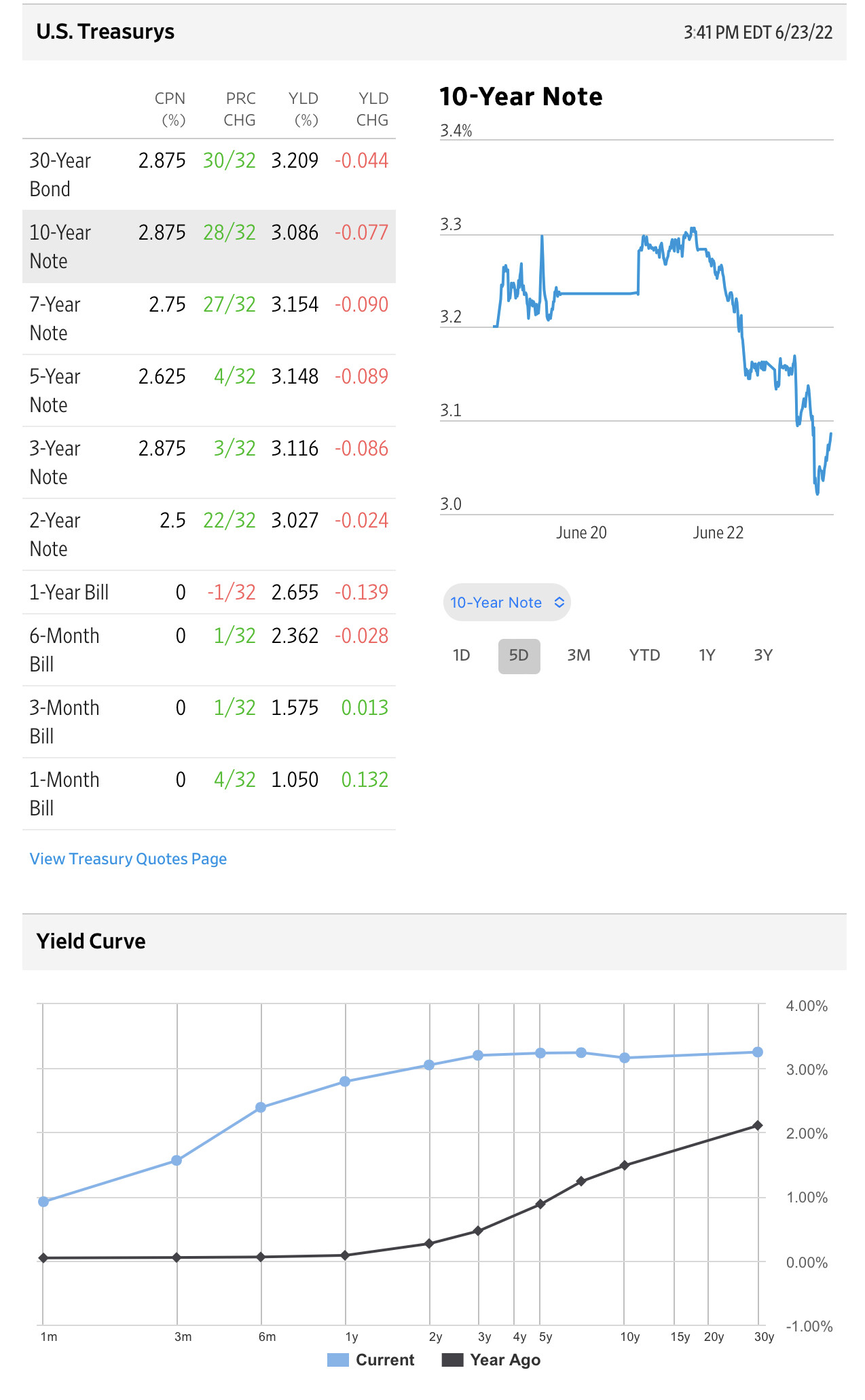
For the first time in a while, the bond market is rallying instead of accenting Powell’s hawkishness, as it’s done before. Like we’ve talked about before in the thread, Eurodollar curve and interest rate swaps are pricing in a Fed Pivot and now Treasury assets are calling Powell’s bluff. Going to hike till something breaks and then money printer go brrr

4 Likes

Rate-hike expectations edged down as investors priced in a higher probability of softer Fed moves in the months ahead. Markets now expect a rate cut in the second half of next year.

https://www.wsj.com/articles/global-stocks-markets-dow-update-06-24-2022-11656055923?st=s6obq4yzjg3fxne&reflink=e2twmkts

:pepepray:

2 Likes

Interesting article on Bloomberg talking about the lack of “fear” with this current market.

Some interesting snippits:

“Not enough investors have been panicking and buying short-term protection puts, which would drive the VIX index much higher,” said Edmund Shing, BNP Paribas Wealth Management’s chief investment officer.

In fact, this year the VIX hasn’t broken the key level of 40, which many experts see as peak fear signal. It jumped to twice that level early in the pandemic and during the credit crisis of 2008.

The current market more closely resembles the one that followed the dot-com collapse, another period when stock valuations slid from what many considered unsustainable highs. The VIX currently implies a 2% daily move in the S&P 500, according to Talal Dehbi, senior sales and quantitative strategist at PrismFP.

Providing a 3rd party archive site since Bloomberg has a paywall.

https://archive.ph/YagMn

or

https://www.bloomberg.com/news/articles/2022-06-25/fear-has-gone-missing-in-wall-street-s-slow-motion-bear-market

8 Likes

Gotta give props to Walter Bloomberg on this one for this coming weeks data releases. Seems pretty solid in my opinion

2 Likes

“Not enough investors have been panicking and buying short-term protection puts, which would drive the VIX index much higher,” said Edmund Shing, BNP Paribas Wealth Management’s chief investment officer.

On this idea I saw some Twitter chatter that suggested that ‘smart money’ is hedging by being cash heavy, rather than buying puts, to explain the lack of VIX spike. It’s Twitter so take that with a grain of salt but it checks out if true.

For example all the big banks with their “SPX 3600” “SPX 3300” etc. price targets. If they have these price targets they should be hedging with puts, right? Seemingly not. Then it must be cash… Idk

4 Likes

Could also be playing long-end treasuries while SPX bottoms out as a curve inversion/recession play in the meantime. Treasuries have been rallying all this week due to recession fears

4 Likes

So I did a thing…

Using data from here to get EPS:

From here for Dividend yield:

And from here to get BBB corporate yields:

I did some nerd API thingies and made a google sheet:

https://docs.google.com/spreadsheets/d/1Gyona9-39nARBmy7ol2gB0E0muU8UME6KQGJoqO3x_g/edit#gid=0

Hopefully I did everything right and the data should update (I have no idea what I’m doing but let’s see lol). The only live data on Sheet 1 is the current implied price of SPX which is in the first row, then all the data (in order, Dividend yield, BBB corporate yield, and EPS) in Sheet 2 should be live. Fingers crossed nothing breaks lol.

Basing off of this:

https://twitter.com/mrblonde_macro/status/1536539866795630592

4 Likes

There’s a convexity element to VIX that I think explains why we haven’t seen big spikes and movement, or in general like we did earlier in the year. The current bear trend that we are in has been a choppy slow decline. The convexity element comes from the IV behind the option contracts. For a big spike in VIX (40+) you need a big move in shorter duration, but work your way back and its always at play to some extent. I still watch VIX daily as an indicator, but this is why I stopped playing VIX options.

4 Likes

https://www.reuters.com/markets/us/dollar-stumbles-rate-path-fuels-recession-worries-2022-06-24/
Forex starting to price in recession

1 Like

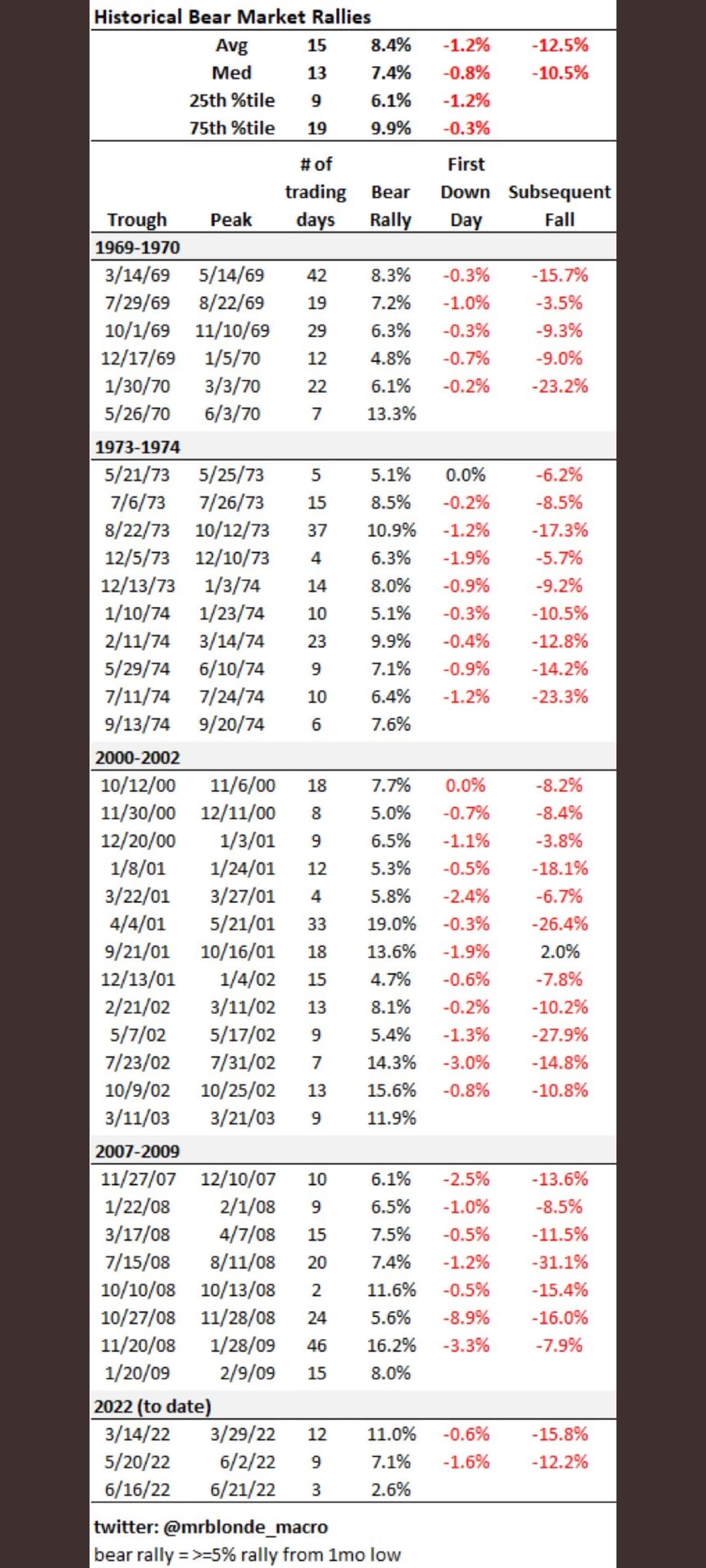
I know it has been talked about on TF and silimilar charts have been shared but I thought this was a cool visual showing bear market rallies and how historically they are pretty common and usually pretty violent.

The biggest challenge is getting out of the way of these things. Im personally working on being more patient and letting a reversal confirm fully. If that happens Im thinking of playing scalps (on quick decline days) and 4 month+ strikes on spy only and leave the swing trades to individual names as these has been my highest win rate trades this year. I think this will help if we see a slow bleed out again. I noticed my worst trades this year have been from playing short swings on spy.

Cash is going to be my friend heading into this week. Planning on just hibernating on green days and focus fully on the opportunities where I have the best probability of success, again, waiting for a reversal to show some confidence first. Lots of data coming out this week so paying close attention to potential catalysts.

Hope everyone has a great week.

5 Likes

Hopefully, this gets factored into the CPI in the coming months.

3 Likes

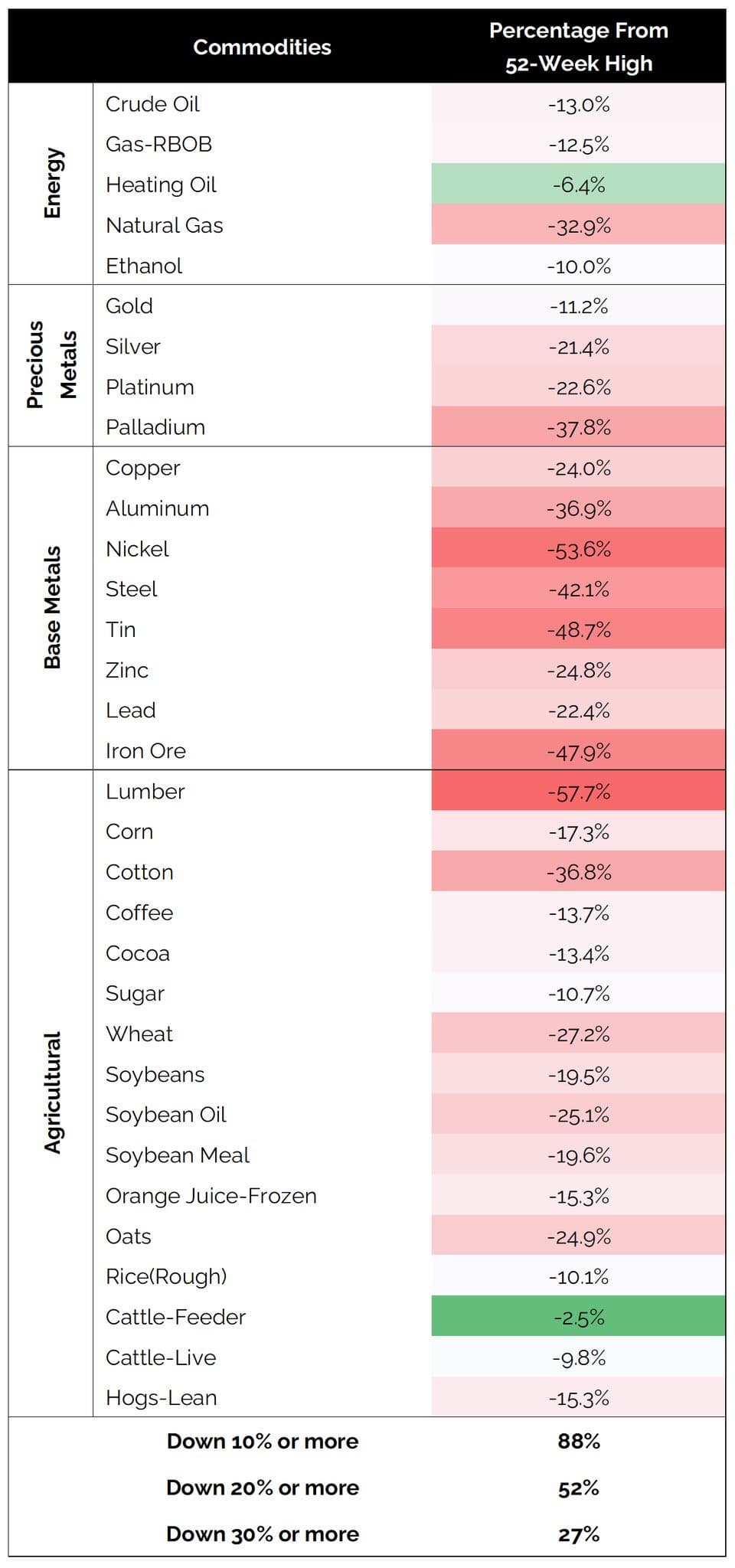
Thanks @Haplo, will be watching if commodities recover from last week’s sell off. As MacroAlf mentioned on his podcast yesterday, if commodities continue to sell off with no real change on the supply side, it will point to demand destruction. Appreciate your posts my dude.

2 Likes

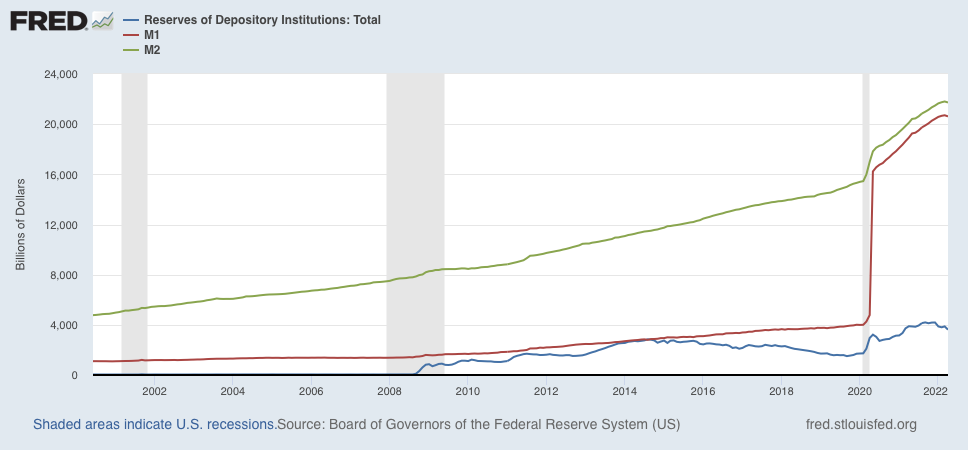
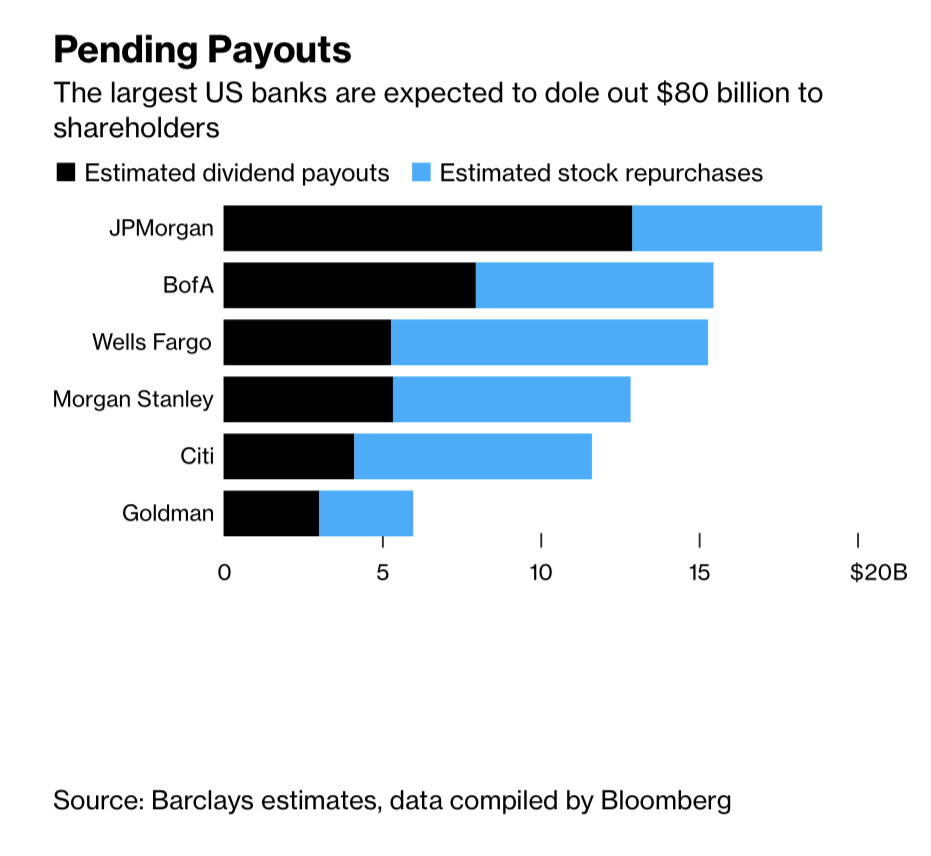
I’ve been wondering about the record amount of cash banks have sitting in repo - my understanding (grain of salt here) is that banks essentially had to hold this cash to pass the stress test.

So I think their decision on what to do with that cash is a big ? - dividends/share purchases if they don’t fear recession, but if they do think recession is base case I guess it either stays in repo or gets spread among short positions.

Not very sure of the details here but this was one of the theories I saw for a potential melt up after FOMC, and might also help explain an overall lack of hedging thus far.

2 Likes

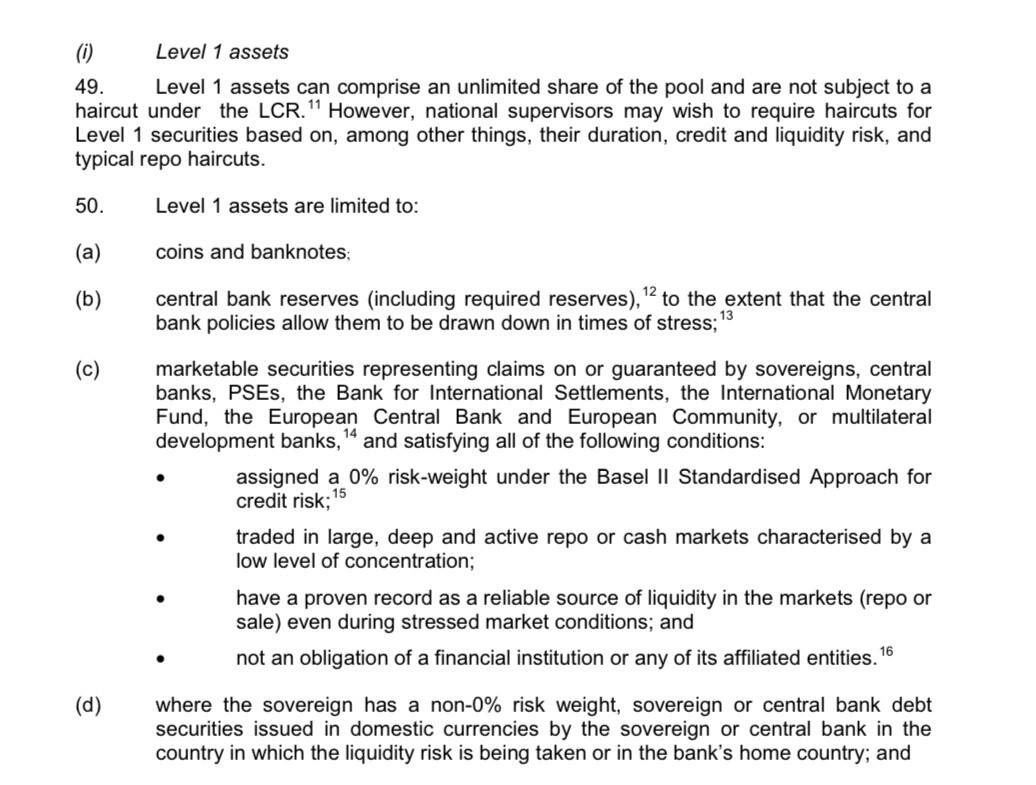
Problem is I’m not entirely sure they can. They have regulatory restrictions that prevent them from moving their reserves into any assets that don’t qualify under Basel 3 (they can, however, participate in repo market with their reserves):

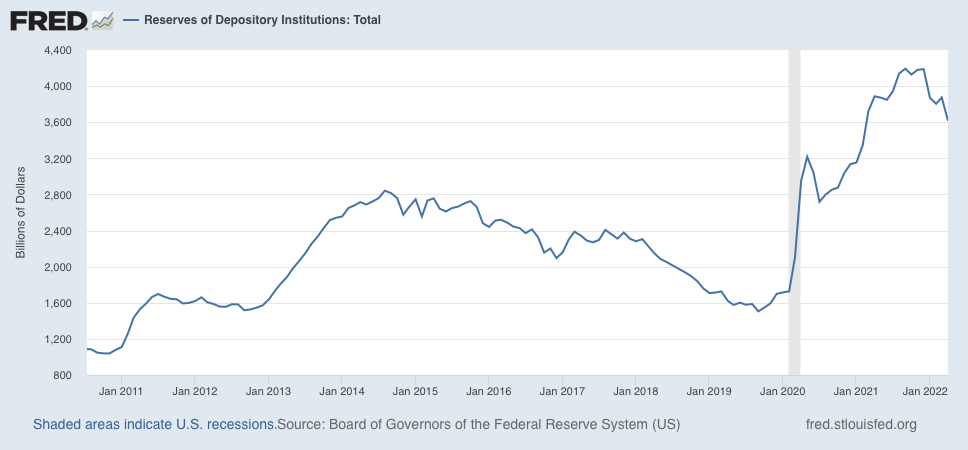
And it’s not like bank reserves are at an all time high, they’ve been steadily declining since October/November, and will continue to decline through QT as the Fed slowly unloads their assets, which would bring down their liabilities (reserves) as well:

2 Likes

https://www.bloomberg.com/news/articles/2022-06-27/morgan-stanley-bofa-send-capital-to-holders-after-stress-tests#xj4y7vzkg

https://archive.ph/7wttm

https://www.yahoo.com/now/banks-ace-fed-stress-tests-203000572.html

So guess I was wrong?

Had a solid day, wasn’t able to scalp spy much due to work but played AFRM, PTON, ARKK, CCL, DAL, NCLH, AAL and HYG. All my favorite names were recharged and ready rock today.
Tomorrow I’m heading out of town for a wedding down in CO. Still planning on doing a little trading and popping into TF, but will be limited.
Hope everyone has a good rest of the week. Stay cautious out there.

6 Likes

https://www.streetinsider.com/Analyst+Comments/Earnings+Estimates+are+Likely+Too+Optimistic%2C+Risk+Not+Fully+Reflected+-+Goldman/20262719.html?classic=1

Goldman Sachs Analyst saying the E in P/E could continue to contract even as valuations might seem attractive.

Our model points to a 70 bp EBIT margin decline next year for the typical S&P 500 company in our economists’ non-recessionary base case, and a 130 bp compression in a recession scenario. In contrast, analyst estimates show the median stock’s EBIT margin expanding by 60 bp next year.

1 Like

Latest Earnings Insight from Factset last week:

Analysts and companies have lowered their earnings expectations for the second quarter to date. As a result, estimated earnings for the S&P 500 for the second quarter are below expectations at the start of the quarter. The index is predicted to report its lowest earnings growth since Q4 2020

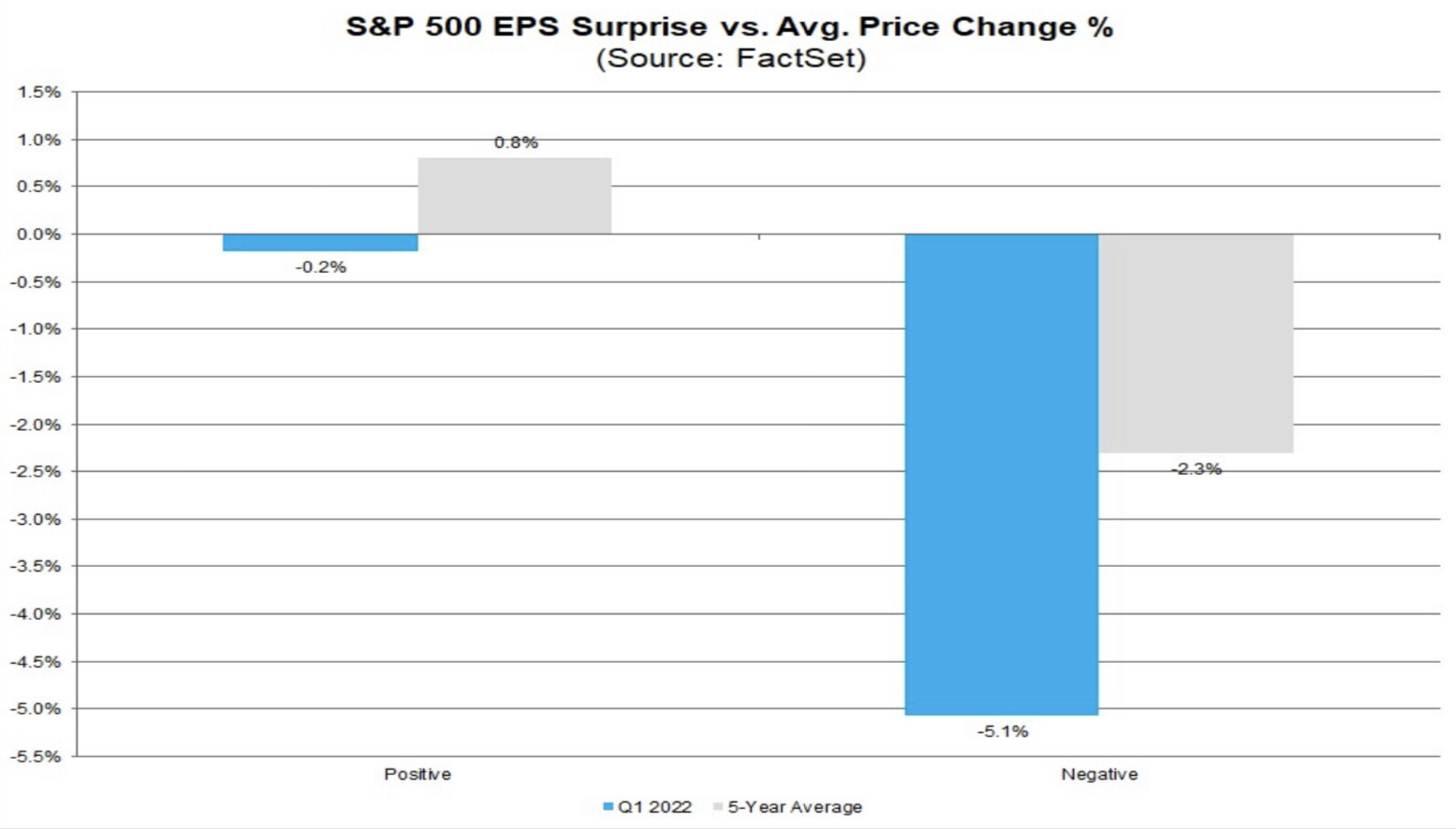
In terms of earnings estimate revisions for companies in the S&P 500, analysts have decreased earnings estimates in aggregate for Q2 2022. On a per-share basis, estimated earnings for the second quarter have decreased by 1.0% since March 31. While this decline is smaller than the 5-year average (-2.3%), 10-year average (-3.3%), and the 15-year average (-4.7%) for a quarter, it is also tied (with Q1 2022) for the largest decline in the quarterly EPS estimate since Q2 2020 (-37.0%).

More S&P 500 companies have issued negative EPS guidance for Q2 2022 compared to recent quarters as well. At this point in time, 103 companies in the index have issued EPS guidance for Q2 2022, Of these 103 companies, 71 have issued negative EPS guidance and 32 have issued positive EPS guidance. This is the highest number of S&P 500 companies issuing negative EPS guidance for a quarter since Q4 2019 (73). The percentage of companies issuing negative EPS guidance for Q2 2022 is 69% (71 out of 103), which is above the 5-year average of 60% and above the 10-year average of 67%.

Because of the higher number of companies issuing negative EPS guidance and the net downward revisions to earnings estimates, the estimated (year-over-year) earnings growth rate for Q2 2022 is lower now relative to the start of the second quarter. As of today, the S&P 500 is expected to report (year-over-year) earnings growth of 4.3%, compared to the estimated (year-over-year) earnings growth rate of 5.9% on March 31.

If 4.3% is the actual growth rate for the quarter, it will mark the lowest earnings growth rate reported by the index since Q4 2020 (3.8%). Six of the eleven sectors are projected to report year-over-year earnings growth, led by the Energy, Industrials, and Materials sectors. On the other hand, five sectors are predicted to report a year-over-year decline in earnings, led by the Financials sector.

In terms of revenues, analysts have continued to be more optimistic than normal in their revenue estimate revisions. Because of the net upward revisions to revenue estimates, the estimated (year-over-year) revenue growth rate for Q2 2022 is higher now relative to the start of the second quarter. As of today, the S&P 500 is expected to report (year-over-year) revenue growth of 10.2%, compared to the estimated (year-over-year) revenue growth rate of 9.6% on March 31.

If 10.2% is the actual growth rate for the quarter, it will mark the sixth-straight quarter of year-over-year revenue growth above 10% for the index. All eleven sectors are projected to report year-over-year growth in revenues, led by the Energy and Materials sectors.

Looking ahead, analysts expect earnings growth of 10.8% for Q3 2022, and 10.0% for Q4 2022. For CY 2022, analysts are predicting earnings growth of 10.4%.

The forward 12-month P/E ratio is 15.8, which is below the 5-year average (18.6) and below the 10-year average (16.8). It is also below the forward P/E ratio of 19.4 recorded at the end of the first quarter (March 31), as prices have decreased while the forward 12-month EPS estimate has increased since March 31.

(Valuations are attractive, but is the E accurate?)

During the upcoming week, seven S&P 500 companies (including two Dow 30 components) are scheduled to report results for the second quarter.

Earnings Surprises still getting punished
3 Likes

Nice Juan always good to see forward thinking. The ultimate pricing in of negative ER and current environment relative to inflation, rate hikes, etc etc. however the slightest positive sentiment around an ER release will appear positive and maybe cause a spike but not to the original guidance or EPS prior to a downgrade. Will be interesting this upcoming ER and look forward to everyone’s contributions as we go into this… to be continued

2 Likes

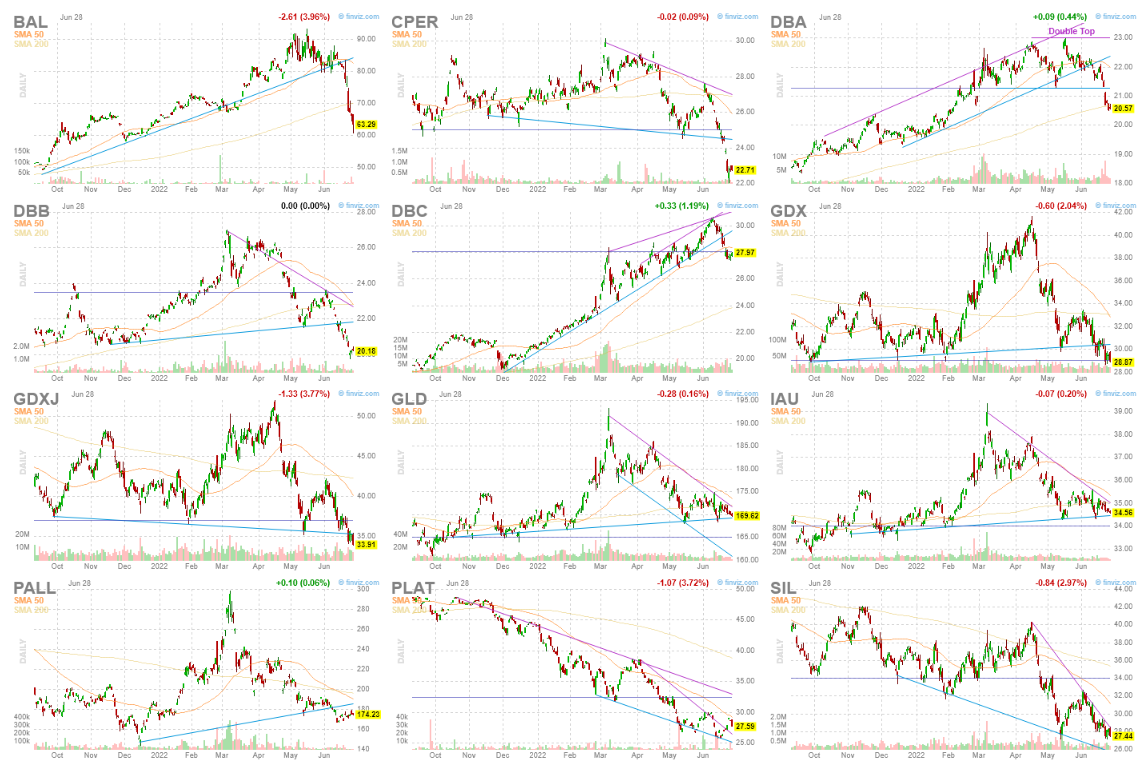
At the raw materials side of things, the bull market there seems to have also come to an end and everything is downward. Except oil and gas (not charted here).

Copped (BAL) plummeted recently - new one to keep an eye on.

5 Likes